BEGIN:VCALENDAR
VERSION:2.0
PRODID:-//School of Public Policy and Global Affairs//NONSGML Events//EN
CALSCALE:GREGORIAN
X-ORIGINAL-URL:https://sppga.ubc.ca/events/event/
X-WR-CALDESC:School of Public Policy and Global Affairs - Events
BEGIN:VEVENT
UID:20200917T1519Z-1600355975.8811-EO-35019-5@10.19.146.2
STATUS:CONFIRMED
DTSTAMP:20261111T145542Z
CREATED:20200909T043314Z
LAST-MODIFIED:20201014T202535Z
DTSTART;TZID=America/Vancouver:20201007T123000
DTEND;TZID=America/Vancouver:20201007T135000
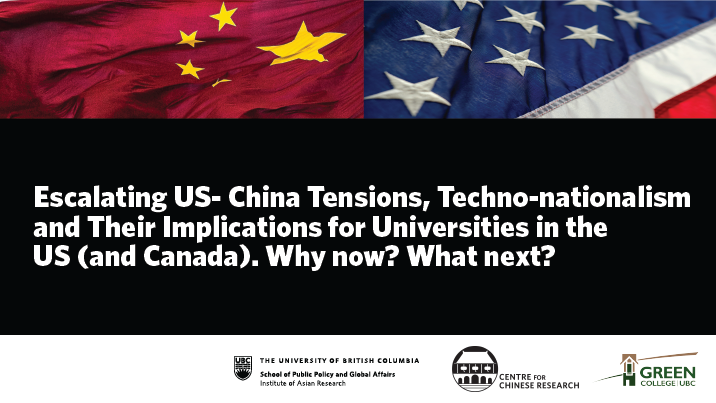
SUMMARY: Escalating US-China Tensions\, Techno-nationalism & Their Implicat
 ions for Universities in the U.S. (and Canada). Why now? What next?
DESCRIPTION: Join this webinar on Oct. 7 featuring Professor Paul Evans (SP
 PGA) and Professor Emeritus John Krige (Georgia Tech) on the escalating US-
 China tensions and implications for universities.
X-ALT-DESC;FMTTYPE=text/html: <p><img class="aligncenter wp-image-35158 siz
 e-full" src="https://sppga.cms.arts.ubc.ca/wp-content/uploads/sites/5/2020/
 09/Webinar-Escalating-US-China-Tensions_Website.png" alt="" width="716" hei
 ght="403" /></p><p>Relations between the United States and China are sourin
 g dramatically in what is rapidly becoming a Cold War setting.  This is hav
 ing significant impact on multiple sectors including universities that over
  four decades have built a web of linkages largely regarded as of mutual ad
 vantage.  In particular\, faculty in STEM and other fields including bio/me
 dicine and Chinese students at American universities\, have become increasi
 ngly entangled in the escalating confrontation between Washington and Beiji
 ng.</p><p>Presidential directives\, Congressional committees\, actions by f
 ederal departments and funding agencies (including NIH and NSF)\, as well a
 s steps taken by some university administrations\, have had a major impact 
 on university-based research collaborations with Chinese counterparts.</p><
 p>Leading researchers\, the majority of them of Chinese descent\, are charg
 ed with betraying the trust placed in them by university administrations an
 d federal granting agencies by transferring cutting-edge knowledge back to 
 China as part of “whole of society” efforts to enhance China’s economic and
  military power at the US’s expense.</p><p>In this online encounter we will
  ask:</p><ul><li>What are the national security and integrity of research c
 onsiderations behind these actions?</li><li>What is the scale and scope of 
 activities considered improper or illegal?</li><li>What have been the conse
 quences for American universities and how have they responded?</li><li>What
  are the implications for third countries\, including Canada?</li><li>How d
 o we balance the advantages of open science\, collaborations\, education an
 d exchange with the need to protect national security\, maintain cyber secu
 rity\, safeguard intellectual property\, and maintain ethical standards?</l
 i></ul><p><strong>Moderator: </strong>Meigan Aronson\, Dean of Science\, UB
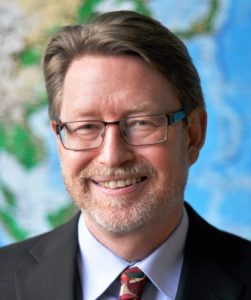
 C</p><p><strong>Presenters:   </strong></p><ul><li>Paul Evans\, Professor\,
  School of Public Policy and Global Affairs\, UBC</li><li>John Krige\, Rege
 nts Professor Emeritus\, Georgia Tech\; Distinguished Visiting Fellow\, Gre
 en College\, UBC</li></ul><p><strong>Commentator:</strong></p><ul><li>Allis
 on Macfarlane\, Director and Professor\, School of Public Policy and Global
  Affairs\, UBC</li></ul><p><a href="https://youtu.be/8Mpx9QW_4og">View the 
 event recording here.</a></p><p><strong>Speakers’ Bios:</strong></p><p><img
  class="wp-image-35025 alignleft" src="https://sppga.cms.arts.ubc.ca/wp-con
 tent/uploads/sites/5/2020/08/cropped-Paul-Evans-1-251x300.jpg" alt="" width
 ="152" height="182" /></p><p><strong>Paul Evans </strong>(PhD with distinct
 ion Dalhousie University 1982) has been a Professor at the University of Br
 itish Columbia since 1999\, teaching Asian and trans-Pacific international 
 relations. His work was based at the Institute of Asian Research and the Li
 u Institute for Global Issues which are now both located in the School of P
 ublic Policy and Global Affairs (SPPGA). An advocate of cooperative and hum
 an security\, he has been studying and promoting policy-related activity on
  track-two security processes and the construction of multilateral institut
 ions since 1988. His recent writings and media commentaries have focused on
  Canada-China relations\, Asian security dynamics\, and the emergence of te
 chno-nationalism as a defining force in regional affairs\, including a rece
 nt essay “Techno-nationalism in China-US Relations: Implications for Univer
 sities\,” East Asian Policy\, June 2020.</p><p><img class="wp-image-35024 a
 lignleft" src="https://sppga.cms.arts.ubc.ca/wp-content/uploads/sites/5/202
 0/08/JK-Head-Caltech-240x300.jpg" alt="" width="143" height="179" /></p><p>
 <strong>John Krige</strong> is Regents Professor Emeritus in the School of 
 History and Sociology at the Georgia Institute of Technology in Atlanta. He
  is an historian working at the intersection between science\, technology a
 nd foreign policy. He has been a Visiting Fellow in Residence at Green Coll
 ege\, and at the Liu Institute for Global Issues. His most recent monograph
 \, co-authored with Mario Daniels (Amsterdam)\, is entitled<em> Knowledge a
 nd National Security in Cold War America</em> (University of Chicago Press\
 , in press). He is also the author of a recent essay\, “Scholars or Spies? 
  U.S – China Tension in Academia\,” China Currents\, Fall 2020.  He has ret
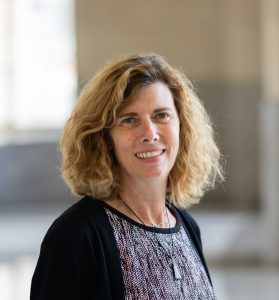
 ired and lives in Paris.</p><p><strong>Moderator’s Bio:</strong></p><p><img
  class="alignleft wp-image-35026 " src="https://sppga.cms.arts.ubc.ca/wp-co
 ntent/uploads/sites/5/2020/08/Meigan-Aronson-square-headshot-2018-300x300.p
 ng" alt="" width="172" height="172" /></p><p><strong>Dr. Meigan Aronson</st
 rong> was appointed Dean of the Faculty of Science at the University of Bri
 tish Columbia (UBC) on September 1\, 2018. Dr. Aronson brings a strong comm
 itment to research\, teaching and learning. She has an extensive publicatio
 n record (more than 140 articles\, including in Nature Communications\, PNA
 S\, Physical Review Letters\, and Physical Review B). She has been honoured
  with a number of fellowships\, including American Physical Society Fellow\
 , and most recently\, Fellow of the Neutron Scattering Society of America. 
 To date\, Dr. Aronson has received more than US$13.5 million in sponsored r
 esearch support. She is passionate about mentoring students and postdoctora
 l fellows\, and has a deep commitment to diversity and improving the succes
 s of students and faculty.</p><p><strong>Commentator:</strong></p><p><img c
 lass="alignleft wp-image-32619 " src="https://sppga.cms.arts.ubc.ca/wp-cont
 ent/uploads/sites/5/2019/12/allison_macfarlane_hi_res-feature-279x300.jpg" 
 alt="Dr. Allison M. Macfarlane - feature" width="206" height="222" />Dr. Al
 lison M. Macfarlane is Professor and Director of the School of Public Polic
 y and Global Affairs within the Faculty of Arts at UBC. Dr. Macfarlane has 
 held both academic and government positions in the field of energy and envi
 ronmental policy\, especially nuclear policy. Most recently\, she directed 
 the Institute for International Science and Technology Policy at the George
  Washington University. She recently held a fellowship at the Wilson Intern
 ational Center for Scholars in Washington\, DC and was Fulbright Distinguis
 hed Chair in Applied Public Policy at Flinders University and Carnegie Mell
 on Adelaide in Australia.</p><h3><a href="https://sppga.cms.arts.ubc.ca/wp-
 content/uploads/sites/5/2020/09/Webinar-Escalating-US-China-Tensions-Poster
 .pdf">Webinar Poster</a></h3><p><strong>Co-Sponsors</strong>: <span data-sl
 ate-fragment="JTdCJTIyb2JqZWN0JTIyJTNBJTIyZG9jdW1lbnQlMjIlMkMlMjJkYXRhJTIyJ
 TNBJTdCJTdEJTJDJTIybm9kZXMlMjIlM0ElNUIlN0IlMjJvYmplY3QlMjIlM0ElMjJibG9jayUy
 MiUyQyUyMnR5cGUlMjIlM0ElMjJwYXJhZ3JhcGglMjIlMkMlMjJkYXRhJTIyJTNBJTdCJTIyY2x
 hc3NOYW1lJTIyJTNBbnVsbCU3RCUyQyUyMm5vZGVzJTIyJTNBJTVCJTdCJTIyb2JqZWN0JTIyJT
 NBJTIydGV4dCUyMiUyQyUyMmxlYXZlcyUyMiUzQSU1QiU3QiUyMm9iamVjdCUyMiUzQSUyMmxlY
 WYlMjIlMkMlMjJ0ZXh0JTIyJTNBJTIyVGhlJTIwQ2VudHJlJTIwZm9yJTIwQ2hpbmVzZSUyMFJl
 c2VhcmNoJTJDJTIwdGhlJTIwSW5zdGl0dXRlJTIwb2YlMjBBc2lhbiUyMFJlc2VhcmNoJTJDJTI
 wJTIwdGhlJTIwU2Nob29sJTIwb2YlMjBQdWJsaWMlMjBQb2xpY3klMjBhbmQlMjBHbG9iYWwlMj
 BBZmZhaXJzJTIwJTJDJTIwYXMlMjB3ZWxsJTIwYXMlMjBHcmVlbiUyMENvbGxlZ2UlMkMlMjBVQ
 kMlMjIlMkMlMjJtYXJrcyUyMiUzQSU1QiU1RCU3RCU1RCU3RCU1RCU3RCU1RCU3RA==">The Ce
 ntre for Chinese Research\, the Institute of Asian Research\, the School of
  Public Policy and Global Affairs\, as well as Green College\, UBC </span><
 /p><p><img class="alignleft wp-image-21321" src="https://sppga.cms.arts.ubc
 .ca/wp-content/uploads/sites/5/2016/11/CCR_Logo_Black_TextVertical_LowRes.p
 ng" alt="" width="150" height="152" /></p><p> </p><p> </p><p> </p><p> </p><
 p> </p><p><img class="alignleft size-medium wp-image-35074" src="https://sp
 pga.cms.arts.ubc.ca/wp-content/uploads/sites/5/2020/09/ubc-logo-2019-sppga-
 asian-research-standard-black-rgb300-300x69.png" alt="IAR & SPPGA combined 
 wordmark" width="300" height="69" /></p><p> </p><p> </p><p> </p><p><img cla
 ss="wp-image-1521 size-medium alignleft" src="https://sppga.cms.arts.ubc.ca
 /wp-content/uploads/sites/5/2016/04/GClogo_newtagline_2014-300x79.png" alt=
 "Green College" width="300" height="79" /></p>
CATEGORIES:Featured Homepage,Featured News &amp\; Events
URL;VALUE=URI:https://sppga.ubc.ca/events/event/escalating-us-china-tension
 s-techno-nationalism-their-implications-for-universities-in-the-u-s-and-can
 ada-why-now-what-next/
ATTACH;FMTTYPE=image/png:https://sppga.cms.arts.ubc.ca/wp-content/uploads/sites/5/2020/09/Webinar-Escalating-US-China-Tensions_Website.png
END:VEVENT
BEGIN:VTIMEZONE
TZID:America/Vancouver
BEGIN:DAYLIGHT
TZOFFSETFROM:-0800
TZOFFSETTO:-0700
DTSTART:20200308T100000
TZNAME:PDT
END:DAYLIGHT
END:VTIMEZONE
END:VCALENDAR