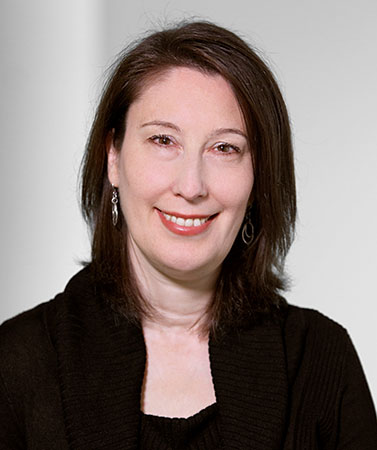
Catherine Hecht
Research Expertise
About
Catherine Hecht is a political scientist whose research and teaching focus on international organizations, multilateral diplomacy, sustainable development, democratic governance, and discourse analysis. Her work examines changes in international institutions and discourses related to social policies, governance, and multilateralism, with an empirical emphasis on the United Nations (UN) system and the Organization for Security and Co-operation in Europe (OSCE).
Dr. Hecht has been teaching in the MPPGA program since 2022. Her recent and current research analyzes shifts in diplomatic positions and discourses over time in the UN General Assembly, UN-sponsored global summits, and other multilateral venues, as well as implications for global policy processes. Previously, she was a Senior Research Fellow at the Centre for Global Cooperation Research at the University of Duisburg-Essen in Germany. She also held a Social Sciences and Humanities Research Council of Canada (SSHRC) post-doctoral fellowship, a post-doctoral fellowship in international relations and taught at the Vienna School of International Studies/Diplomatic Academy of Vienna. She has also taught at the Technische Universität Darmstadt. She holds a Ph.D. in political science from UBC and a Master of International Affairs in economic and political development from Columbia University’s School of International and Public Affairs. In earlier professional experience, she served as a consultant with the United Nations Development Programme (UNDP) and has worked with the World Bank’s Africa region and with civil society organizations in Central Europe. She has also observed several elections with the OSCE’s Office for Democratic Institutions and Human Rights.
Teaching
Publications
Journal articles:
Hecht, C. (2025). “Dynamics of Salient Normative Status Dimensions and Issues in a Changing International Order.” Global Constitutionalism. https://doi.org/10.1017/S2045381725000073
Hecht, C. and J. Steffek (2024). “Salient Discourses in International Society: When and how have United Nations Global Conferences acted as Catalysts?” Journal of International Relations and Development 27: 283-314. https://doi.org/10.1057/s41268-024-00324-7
Hecht, C. (2021). “When Democratic Governance Unites and Divides: Social Status and Contestation in the Organization for Security and Co-operation in Europe.” Cooperation and Conflict 56(1): 44-64.
Hecht, C. (2017). “Advantages and Disadvantages of Inclusive Multilateral Venues: The Rise and Fall of the United Nations General Assembly Resolution on New or Restored Democracies.” International Politics 54(6): 714-728.
Hecht, C. (2016). “Success after Stalemate? Persistence, Reiteration, and Windows of Opportunity in Multilateral Negotiations.” Journal of International Organizations Studies 7(2): 23-38.
Hecht, C. (2016). “The Shifting Salience of Democratic Governance: Evidence from the United Nations General Assembly General Debates.” Review of International Studies 42(5): 915-938.
Chapter:
Hecht, C. (2023). “Inclusive Approaches to Multilateral Democracy Cooperation: Challenges and Opportunities for Canada.” In Canada Among Nations 2022: Democracy and Foreign Policy in an Era of Uncertainty, M.A. Cameron, D. Gillies, and D. Carment (eds.), Chapter 7, pgs. 133-153. Cham, Switzerland: Palgrave MacMillan.