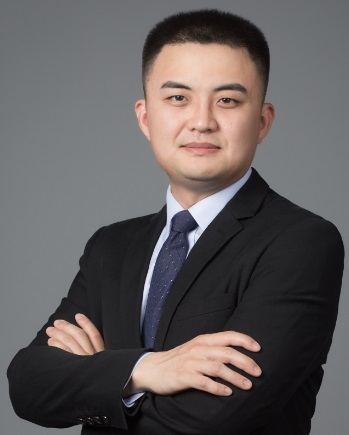
Qiang Fu
Geographic Expertise
About
Dr. Qiang Fu is an Associate Professor, cross-appointed between the UBC School of Public Policy and Global Affairs and the department of Sociology. He also serves as the Co-Director of the Centre for Chinese Research, and the Republic of China Chair.
His research projects focus on a variety of topics including social and discursive construction of Chinese history, everyday life in Chinese cities, and politics of law and legalization of politics in China. His recent publications have appeared in journals such as American Journal of Epidemiology, American Journal of Sociology, Annals of the American Association of Geographers, Annals of Epidemiology, Journal of the Royal Statistical Society: Series A, and Sociological Methods & Research.
Current projects include:
A Phenomenological Analysis of Institutional Changes and the Everyday Life of Political Elites in China: Utilizing a phenomenological perspective to explore the daily experiences, subjective perceptions, and behavioral logics of political elites in China during the process of macro-institutional transformation, focusing on how structural changes embed into and reshape the micro-lifeworlds of elites.
Applying Big Data Analytics to Modern Chinese History: Utilizing big data and computational social science methods to process and explore modern historical materials (e.g., newspaper articles), revealing long-term evolutions and macro patterns of historical social structures in China.
New Chinese Immigrants to Canada Beyond Chinatown: Examining the occupational/residential choices, social integration patterns, economic activities, and transnational networks of recent Chinese immigrants in urban spaces outside of traditional Chinatowns.
Social Capital, Community Building, and Neighborhood Governance in Chinese Cities: Focusing on urban grassroots organizations in China to analyze how social capital and networks among residents evolve, alongside the mechanisms through which state power, grassroots organizations, and homeowners jointly participate in neighborhood governance.
Machine Learning and Novel Tools in Survey Methodology: Exploring the application of emerging technologies—such as machine learning (e.g., Fisher Information Maximizer) and survey experiments—to traditional questionnaire design, data collection, and the improvement of survey data quality.